Refreshed Website 🎉
We just refreshed our website! Exciting new pages and resources will be continually added over the coming weeks.

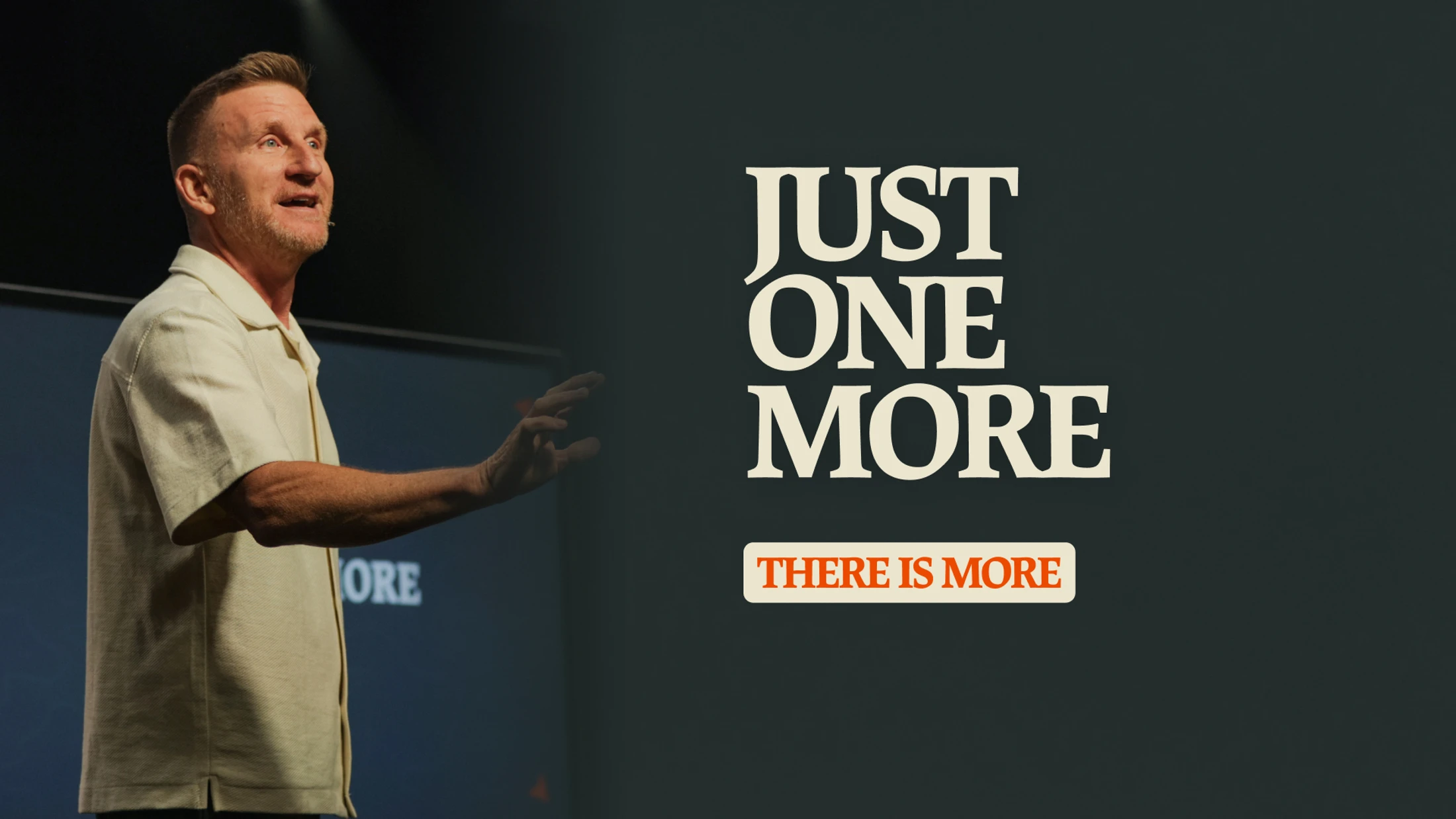
Just One More: How the Gospel Keeps Moving
Imagine receiving a package with explicit instructions: don't keep it—deliver it. For two thousand years, this has been the story of the gospel. It has never belonged to those holding it. It has only been entrusted to them, passed from hand to hand, heart to heart, generation to generation.
A Package That Won't Stop Moving
The journey is remarkable. From Jerusalem to Antioch. To Rome by the end of the first century. Then spreading like wildfire—to North Africa, Egypt, Syria, Greece, and likely even India. By the second century, Christianity reached what is now modern France. Armenia became the first nation to officially adopt Christianity in 301 AD. Ethiopia followed in 328 AD.
St. Patrick brought the message to Ireland. Augustine of Canterbury carried it to England. Missionaries reached China during the Tang Dynasty. The gospel swept through Scandinavia, Iceland, and eventually crossed the Atlantic to the Americas. William Carey launched the modern Protestant missionary movement in 1792, inspiring Christians worldwide to take the gospel to every nation.
The package kept moving westward across America, reaching the Pacific Northwest, where churches were planted in Washington Territory—in Walla Walla, Seattle, Spokane, and Tacoma. And it continues today, in churches large and small, in prisons, in schools, in homes across the world.
The question is: will the package stop with us, or will we deliver it to just one more?
Philip's Desert Assignment
In Acts chapter 8, we encounter a man named Philip—one of the first deacons chosen to serve the early church. While revival was breaking out in Samaria, with thousands coming to faith, miracles happening, and the Holy Spirit moving powerfully, God gave Philip a strange assignment.
An angel told him: "Go south down the desert road that runs from Jerusalem to Gaza."
How odd this must have felt. Leave the crowds? Leave the revival? Go to an empty desert road?
Sometimes we assume bigger crowds mean greater impact. But God often measures impact differently. Philip left revival for one conversation because heaven celebrates people, not just crowds.
The Power of Listening
Philip's story teaches us something profound about how the gospel keeps moving. First, he listened to the Holy Spirit. An angel told him where to go, but the Holy Spirit told him what to do when he got there: "Go over and walk along beside the carriage."
God rarely tells us every detail. He simply says go. Talk to that person. Sit beside them. Call them. Text them. Invite them.
What occupies your mind every day? Work, schedules, bills, kids' activities? But what occupies God's mind every moment of every day? Lost people. Jesus said, "I came to seek and to save that which was lost."
If His mission becomes our mission, we'll begin noticing people we used to walk right past.
There's a massive difference between being left somewhere and being sent somewhere. Most Christians live as though God has simply left them wherever they happen to be. But Scripture teaches something different: we are sent. Sent to that workplace. Sent to that school. Sent to that neighborhood. Sent to that team.
When we forget we've been sent, we end up being spent on things that don't really matter.
Questions That Open Doors
Philip not only listened to God—he listened to people. When he ran over to the carriage, he heard a man reading aloud from the prophet Isaiah. Philip asked one simple question: "Do you understand what you're reading?"
He didn't begin with a sermon. He began with curiosity. Questions open doors to people's hearts. People love talking to those who genuinely care about them.
Some of the best evangelists aren't great speakers—they're great listeners. Maybe the most spiritual thing we could do this week is simply ask another question:
People are often much more ready than we realize.
The Man Nobody Wanted
The Ethiopian eunuch Philip encountered had traveled hundreds of miles to worship God in Jerusalem. But because he was both a foreigner and a eunuch, he was excluded from entering the temple. Deuteronomy 23 barred eunuchs from worship, and the temple itself excluded Gentiles.
Archaeologists have recovered the actual warning stones that hung at the temple entrance: "No foreigner is to enter in. Whoever is caught will himself be responsible for his consequent death."
His entire life had communicated: you don't belong.
Yet God sent Philip to someone religion had rejected to tell him about Jesus. And when Philip explained the gospel—beginning with the very passage the man was reading in Isaiah 53—the Ethiopian believed immediately.
"Look, there's some water," he said. "Why can't I be baptized?"
They stopped the carriage right there. Philip baptized him in the water. And the man went on his way rejoicing.
Why such joy? Because on that same scroll, just three chapters later in Isaiah 56, he would read these words: "Do not let the foreigner say, 'The Lord has utterly separated me from his people.' Nor let the eunuch say, 'Here I am, a dry tree.' For thus says the Lord: 'To the eunuchs who keep my Sabbaths and choose what pleases me and hold fast my covenant, even to them I will give in my house and within my walls a place and a name better than that of sons and daughters.'"
God receives people religion rejects.
Leading People to Their Next Step
Philip's approach was beautifully simple. He listened to God. He got close to people. He heard their questions. He answered with truth. And he led them to their next step.
Everyone has a next step in their spiritual journey. We don't save people—only God does that. We simply help people take their next step. Sometimes that's explaining the gospel. Sometimes it's an invitation to church. Sometimes it's offering to pray.
For two thousand years, this package has been passed from believer to believer. Someone carried it to your city. Someone carried it to you. The address label was never meant to stop with us.
Just One More
God isn't asking any of us to save the world. He's just asking us to deliver the package to just one more.
If we ask God, "Who is on your heart?" He will often place someone on ours. This week, slow down. Listen. Get in that grocery line. Go to that store. Hear people—really hear them. You might discover they're not cranky; they're hurting. They're not difficult; they're afraid. They're not distant; they're lonely.
Ask a question. Sit with them. Share your story. Invite them. Lead them one step closer.
The gospel has traveled from Jerusalem to the ends of the earth, one conversation at a time, one person at a time, one step at a time.
Now it's in your hands.
Who is your one more?